THE HOME NOTEBOOK / 06 GUIDES
Measure & Plan
A better layout begins before you buy a container. Find the usable dimensions, test the route and leave room to reach what you use.
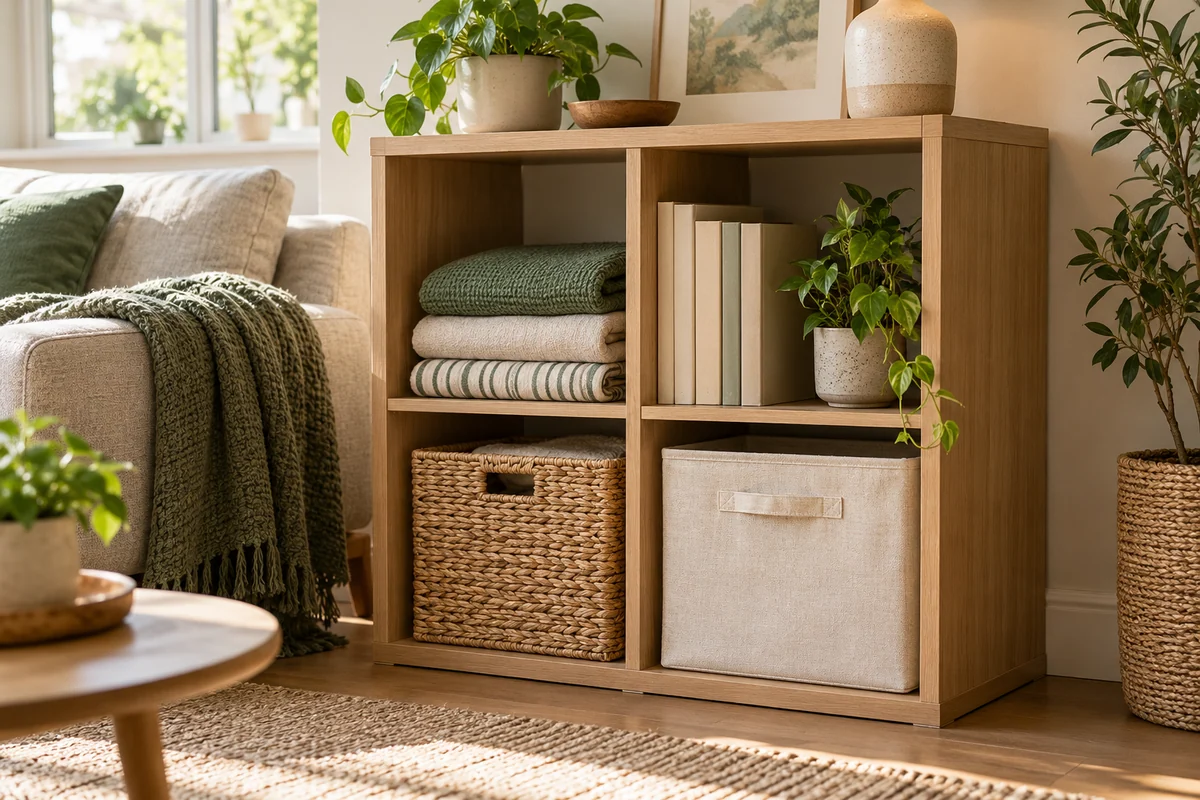
START WITH THE SPACE
Measure a Shelf Before Buying Storage Bins
Measure the space a bin can occupy, pass through and leave again—not just the front edge of a shelf.
What you'll have: A measurement sheet with internal dimensions, obstacles and separate handling clearances.
Read the complete guide →Six notes for a measured plan
01Measure a Shelf Before Buying Storage Bins
Measure the space a bin can occupy, pass through and leave again—not just the front edge of a shelf.
Make: A measurement sheet with internal dimensions, obstacles and separate handling clearances.
Will These Bins Fit? A Worked Shelf Layout
Compare two simple layouts and see exactly why a small gap can change the answer.
Make: Two complete grid calculations, a gap counterexample and a printable measurement record.
Open Tray, Basket, or Lidded Box? Choose by How You Use It
Choose the retrieval routine first, then the container that supports it.
Make: A container decision table that includes the inconvenience of each option.
Plan a Drawer Around the Items You Actually Own
Start with real footprints and build divisions around the way items leave the drawer.
Make: A scaled drawer sketch, an item-footprint table and a comparison showing lost space.
Set a Storage Limit Before You Add More Containers
Allocate a finite number of places and give overflow a decision rather than another box.
Make: A capacity-allocation worksheet and a worked overflow decision.
Try a Storage Layout Before You Buy Anything
Use paper footprints and borrowed containers to expose awkward movements early.
Make: A reversible layout trial, an access log and clear reasons to revise the plan.