THE HOME NOTEBOOK / 06 GUIDES
Kitchen & Linen
Keep complete sets easy to find. Plan for the lid, the handle, the small towel and the last pillowcase, rather than just the biggest item on the shelf.
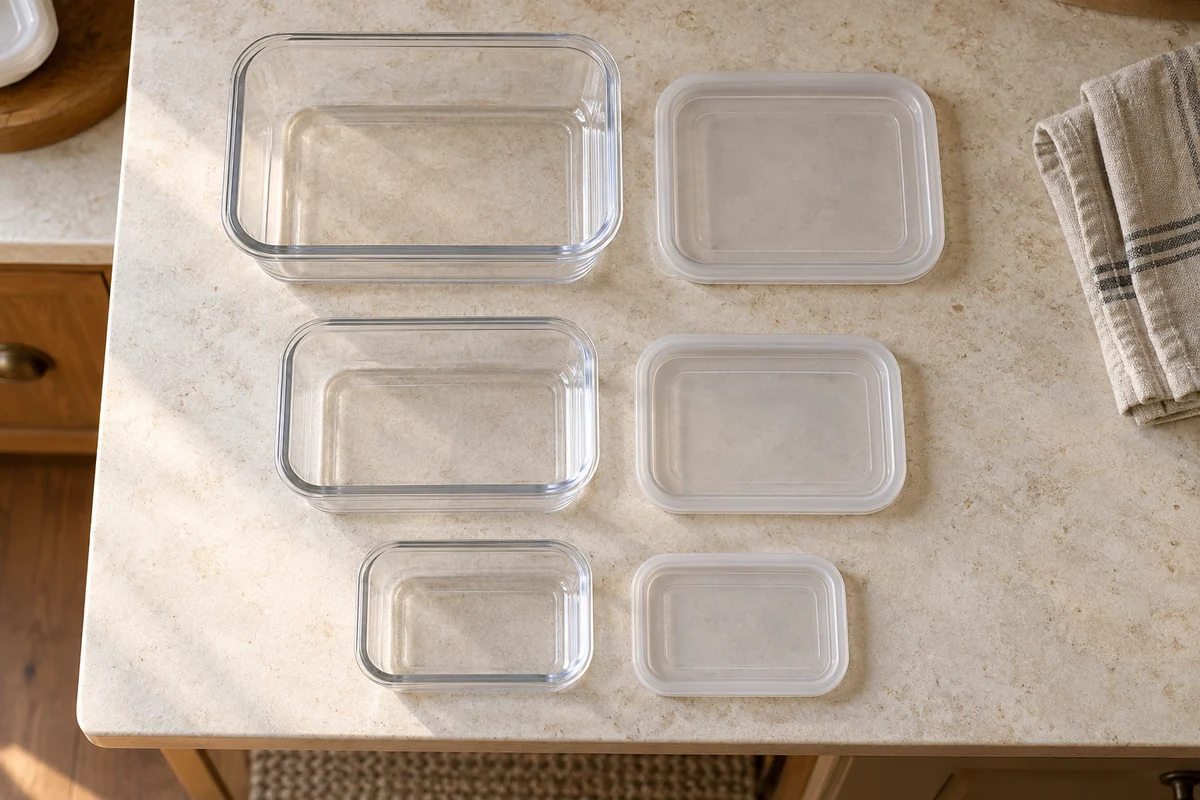
BEGIN WITH THE COMPLETE SET
Match Food Containers and Lids Before Organizing Them
Pair first, then compare storing complete sets with nesting and a separate lid file.
What you'll have: A pairing inventory and a retrieval comparison for two complete arrangements.
Read the complete guide →Six notes for kitchen and linen
01Match Food Containers and Lids Before Organizing Them
Pair first, then compare storing complete sets with nesting and a separate lid file.
Make: A pairing inventory and a retrieval comparison for two complete arrangements.
Plan Mug Storage Around Handles, Not Just Cup Width
Use the full footprint and compare handle directions without claiming a stability test.
Make: A handle-envelope drawing and two numerical orientation checks.
Divide a Utensil Drawer by the Jobs You Do
Group kitchen utensils by the task that brings them out together, then check the space each group needs.
Make: A task-to-item list and two complete grouping examples.
Keep Lunchbox and Bottle Accessories Together
Tie small inserts, lids and spare parts to a named parent item instead of a generic spare-parts pile.
Make: A parent-and-parts inventory with a ready-to-pack check.
Organize Towels on a Shelf Without Hiding Small Pieces
Give small towels their own visible front so the largest stacks do not conceal the rest.
Make: A shelf-zone sketch and a choice between short stacks and a small-piece container.
Label Bedding Sets So the Right Pieces Stay Together
Use measured dimensions and expected piece counts instead of relying only on color or size names.
Make: Printable set-label fields, a dimension record and a complete set-reconciliation method.